
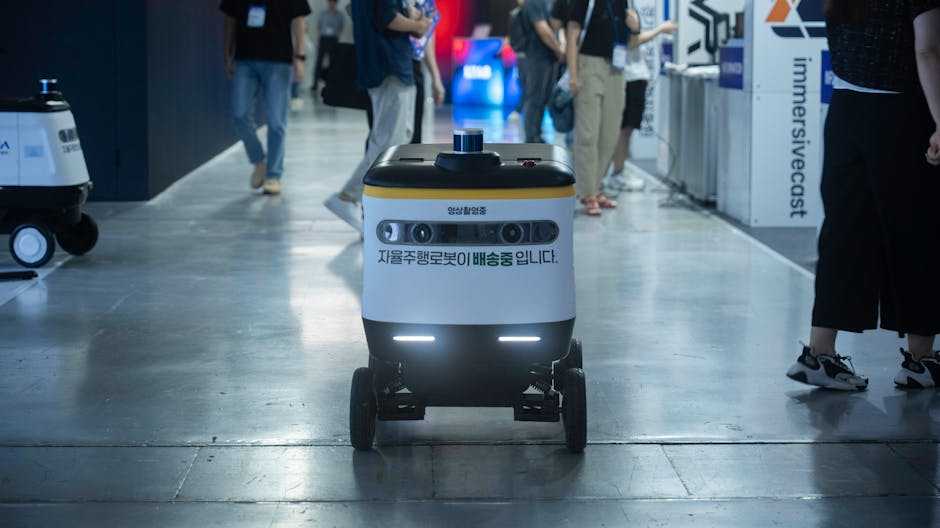
What’s Driving the Shift
Modern warehouses are under more pressure than ever, and mobile robots are stepping in to meet the growing demands. Here’s what’s fueling the widespread adoption of mobile automation.
eCommerce Boom Meets Labor Shortages
The spike in eCommerce activity over the past few years has pushed fulfillment centers to operate at maximum capacity.
As online orders increase, so does the volume of warehouse tasks
Labor shortages across logistics and distribution sectors are making it harder to meet demand
Manual processes can no longer keep pace with scaling requirements
Speed Matters: The Delivery Race
Fast shipping isn’t a luxury anymore it’s expected. Warehouses must now act as high speed hubs that turn orders around in hours, not days.
Customers expect same day or next day delivery
Distribution centers are racing the clock on a constant basis
Reducing time between order intake and shipment is critical
The Need for Scalable, Cost Effective Solutions
To compete, warehouses need automation that can flex with demand without massive infrastructure overhauls.
Mobile robots provide flexible deployment options
They scale up or down based on business needs
Lower long term labor and operational costs make them attractive for ROI focused companies
In short, the shift toward mobile robotics isn’t just a trend it’s a necessity driven by market realities that demand agility, consistency, and speed.
What Mobile Robots Actually Do
Modern mobile robots aren’t built to replace every worker they’re designed to handle the grunt work, with precision and consistency. Most commonly, they’re deployed for high frequency tasks: picking products from shelves, sorting items for outbound shipments, staging goods in loading zones, and running periodic inventory checks. These are repetitive processes, and that’s where robots thrive.
The magic lies in their autonomy. Using real time navigation, these machines move through complex warehouse layouts while avoiding people, obstacles, and congested zones. They calculate the fastest, safest path and adjust on the fly. That agility keeps operations fluid even during peak hours.
On top of the hardware and navigation stack is software integration. Mobile robots link directly with warehouse management systems (WMS), syncing task queues with live inventory data. That means every robot knows what to pick, where to deliver it, and how to reroute if something changes. You’re not just automating movement you’re automating decisions, too.
Measurable Wins from Automation
The numbers don’t lie. Warehouses integrating mobile robots are seeing error rates drop fast especially in order picking and real time inventory tracking. Human fatigue and manual miscounts are harder to eliminate with training alone. Autonomous systems don’t make the same mistake twice, and that’s a game changer for fulfillment accuracy.
Downtime is shrinking, too. Robots don’t take breaks, and with smart task scheduling built into warehouse management systems, dead zones in workflows are getting patched. When downtime shrinks, throughput grows. Facilities are turning over more inventory per shift without stretching labor or floor space.
Look at ShipNow Logistics in Ohio. After deploying 35 AMRs across two hubs, they reported a 40% increase in order throughput and a 60% cut in mis picks within four months. Or Atlas SupplyChain’s Nevada facility robot supported pickers now handle twice as many tasks per hour with fewer bottlenecks and less idle walking.
The takeaway? Mobile robots aren’t just tech upgrades they’re force multipliers. The boost in efficiency, speed, and precision translates directly into better performance metrics across the board.
Collaboration Over Replacement

In the modern warehouse, it’s not man or machine it’s both. Autonomous Mobile Robots (AMRs) aren’t here to replace workers. They’re teaming up with them. Think of AMRs as practical partners: they handle repeat trips, reduce downtime, and clear space for people to focus on higher impact work.
Safety is built in. Most AMRs come equipped with LIDAR, depth cameras, and real time obstacle detection. They stop, reroute, or slow down when people enter their path no drama, no accidents. The goal is seamless flow, not disruption. Robots navigate the floor like seasoned co workers who stay out of the way but always show up.
This shift means roles change. Warehouse staff aren’t just moving boxes they’re managing workflows, monitoring systems, and making judgment calls. Upskilling isn’t optional. Quick start training for robot operation, system dashboards, or even basic maintenance is becoming the norm. It’s not about coding degrees; it’s about enabling people to work smarter alongside machines.
The future of warehouse productivity runs on blended teams. Those that figure this out early will move faster, safer, and leaner.
The Role of Autonomous Intelligence
Autonomy isn’t just a tech buzzword it’s what separates today’s mobile robots from the last gen machines stuck on fixed tracks and pre scripted loops. In a fast moving warehouse, things change by the minute. Boxes get misplaced. People move through zones. Orders shift on the fly. A robot that can think on its feet (figuratively speaking) is the one that adds real value.
Autonomous Mobile Robots (AMRs) use sensors, onboard processing, and environmental data to make decisions in real time. That means they don’t need someone to constantly map their route for them they adapt, reroute, and optimize as they go. This flexibility goes a long way in warehouses juggling volume fluctuations, SKU complexity, or shifting floor layouts.
More importantly, these robots aren’t just reacting they’re learning. With every trip across the floor, they get smarter about routes, timing, task sequences, and even traffic patterns from other units or human workers. It’s adaptive intelligence applied to logistics. The result: better efficiency and fewer headaches.
Want to see how it plays out in real world warehouses? Read the full breakdown: Autonomous Robots in Warehousing.
Getting Ready for Deployment
Integrating mobile robots into a warehouse isn’t just a plug and play operation. It requires thoughtful preparation across infrastructure, vendor selection, and internal change management. Here’s how to lay the groundwork for a successful rollout:
Infrastructure Upgrades to Consider
Before deployment, facilities must ensure that their physical and digital environments can support robotic operations.
Reliable Wi Fi coverage across the entire warehouse for uninterrupted robot communication
Clear navigation paths, including adequate aisle widths and optimized layouts
Charging stations or battery swap areas suited to the robot fleet’s needs
Integrated software systems that allow seamless data sharing with warehouse management systems (WMS)
Choosing the Right Vendor and Process Mapping
Not all automation partners are created equal. Selecting a vendor involves more than comparing price tags.
Evaluate vendors based on robot capabilities, durability, support services, and customization options
Ask for proof of performance (e.g. case studies, pilot programs, or references)
Collaboratively map your processes to identify high impact areas where robots can make the biggest difference
Look for platforms that allow open integration with your existing tools and systems
Change Management: Setting the Stage Internally
Even the best technology fails without internal alignment. Change management ensures that your people and systems are ready.
Communicate early with staff about what’s changing and why
Offer training and reskilling programs to prep employees for hybrid workflows
Set realistic timelines that include testing phases and feedback loops
Appoint internal champions who can advocate for the transition and assist in troubleshooting
Laying this foundation ensures that the integration of mobile robots delivers not only initial productivity gains, but long term operational clarity and cohesion.
Long Term Productivity ROI
As mobile robots become more central to warehouse operations, their long term impact extends far beyond initial gains in efficiency. Understanding how maintenance, scalability, and performance metrics align with evolving business needs is essential to maximizing ROI.
Ongoing Maintenance: Key to Sustainable Uptime
To ensure consistent performance, warehouses must plan for routine maintenance and technical support. Unlike traditional machinery, AMRs (Autonomous Mobile Robots) often rely on software updates and sensor calibration as much as mechanical upkeep.
Schedule preventive maintenance to minimize downtime
Monitor hardware health indicators to identify issues early
Leverage real time diagnostics offered by most AMR platforms
Scalability: Growing Smarter, Not Just Bigger
Modern AMRs are designed to scale with your operation. Whether you’re expanding square footage or increasing product variety, automation should enhance not hinder flexibility.
Easily integrate additional robots into existing workflows
Use modular systems that grow with demand spikes
Prioritize platforms that integrate with evolving WMS and ERP systems
Performance Benchmarks That Matter
Tracking the right performance metrics ensures that automation delivers real value over time. Teams should look beyond initial throughput numbers and focus on sustained improvements.
Uptime percentage: High availability improves consistency
Task completion time: Faster cycles per pick or per run = higher output
Accuracy rates: Precision in sorting and inventory tracking saves time and cost
Future Proofing Through Autonomous Adaptability
Mobile robots equipped with autonomous intelligence can adapt to changing warehouse layouts, shifting inventory demands, and new operational strategies. This adaptability offers future proofing in a volatile logistics landscape.
Rapid adjustment without needing to reprogram workflows
Continuous learning improves path optimization and task efficiency
Responds to both seasonal spikes and long term growth
For a deeper exploration of the role autonomy plays in long term gains, revisit: Autonomous Robots in Warehousing

 Ask Mikeric Edwardsons how they got into gadget reviews and you'll probably get a longer answer than you expected. The short version: Mikeric started doing it, got genuinely hooked, and at some point realized they had accumulated enough hard-won knowledge that it would be a waste not to share it. So they started writing.
What makes Mikeric worth reading is that they skips the obvious stuff. Nobody needs another surface-level take on Gadget Reviews, Practical Tech Applications, Latest Tech Innovations. What readers actually want is the nuance — the part that only becomes clear after you've made a few mistakes and figured out why. That's the territory Mikeric operates in. The writing is direct, occasionally blunt, and always built around what's actually true rather than what sounds good in an article. They has little patience for filler, which means they's pieces tend to be denser with real information than the average post on the same subject.
Mikeric doesn't write to impress anyone. They writes because they has things to say that they genuinely thinks people should hear. That motivation — basic as it sounds — produces something noticeably different from content written for clicks or word count. Readers pick up on it. The comments on Mikeric's work tend to reflect that.
Ask Mikeric Edwardsons how they got into gadget reviews and you'll probably get a longer answer than you expected. The short version: Mikeric started doing it, got genuinely hooked, and at some point realized they had accumulated enough hard-won knowledge that it would be a waste not to share it. So they started writing.
What makes Mikeric worth reading is that they skips the obvious stuff. Nobody needs another surface-level take on Gadget Reviews, Practical Tech Applications, Latest Tech Innovations. What readers actually want is the nuance — the part that only becomes clear after you've made a few mistakes and figured out why. That's the territory Mikeric operates in. The writing is direct, occasionally blunt, and always built around what's actually true rather than what sounds good in an article. They has little patience for filler, which means they's pieces tend to be denser with real information than the average post on the same subject.
Mikeric doesn't write to impress anyone. They writes because they has things to say that they genuinely thinks people should hear. That motivation — basic as it sounds — produces something noticeably different from content written for clicks or word count. Readers pick up on it. The comments on Mikeric's work tend to reflect that.