
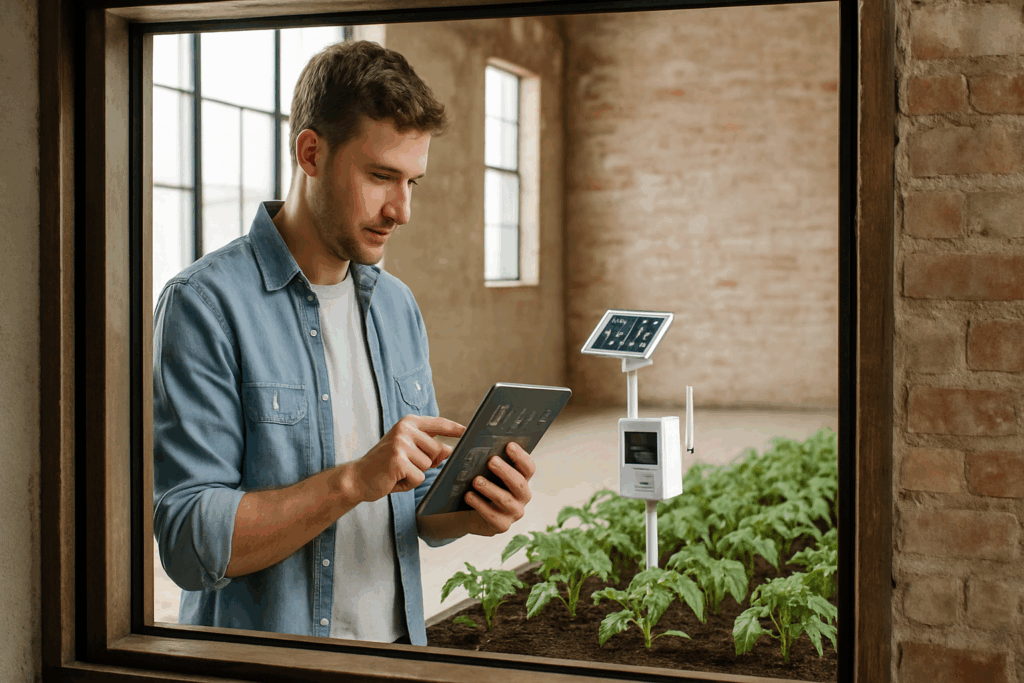
Smart Farming: The Backbone of Modern Agriculture
The integration of the Internet of Things (IoT) into agriculture is changing how farms operate bringing an era of smart farming that is defined by efficiency, precision, and real time insights. Rather than relying on gut instinct or traditional calendars, today’s farmers are leveraging interconnected devices that collect and process data, transforming how decisions are made and resources are managed.
What IoT Really Looks Like on the Modern Farm
IoT in agriculture isn’t just a futuristic concept it’s already present and growing. Across crop fields and pastures, connected devices now form the digital nervous system of many farming operations.
Key technologies used on smart farms include:
Soil sensors that measure moisture, nutrient levels, and temperature in real time.
Weather stations that provide hyper local forecasts.
Connected tractors and machinery equipped with GPS and telemetry systems.
Drones and satellite mapping for aerial imaging and field analysis.
These tools allow farmers to control and monitor equipment and field conditions from mobile apps or computer dashboards.
Automation Meets Agriculture
Automation powered by IoT is reducing the burden of manual labor and improving task accuracy. For example:
Tractors can now self navigate using real time GPS data and follow pre planned field maps.
Irrigation systems automatically adjust water usage based on soil readings and weather updates.
Seeding and fertilizing machines apply treatments with pinpoint precision, reducing waste and runoff.
Real Time Decision Making with Data
Instead of reacting to problems after they occur, IoT enables predictive and proactive farming. With constant streams of data flowing from sensors to centralized platforms, farmers can:
Detect early signs of crop stress or nutrient deficiencies.
Optimize irrigation schedules based on current and forecasted soil conditions.
Make immediate adjustments to field tasks based on real world variables.
By turning data into action, IoT helps farmers work smarter not just harder leading to higher productivity and stronger environmental stewardship.
Precision Agriculture in Action
Think of traditional farming as painting with a broad brush. Precision agriculture, powered by IoT, is more like using a surgical scalpel. Thanks to connected sensors in soil, drones in the air, and data flowing in real time, growers can apply water, fertilizer, and pest treatments exactly when and where they’re needed and nowhere else.
The integration of satellite imagery with on ground sensors gives farmers a live, detailed picture of field conditions. That means less guessing and more doing. Instead of flooding an entire section with irrigation, a smart system directs water to the thirsty zones only. Fertilizer? It’s dosed by need, not habit. Pest control becomes preemptive and pinpointed, cutting down on chemical overuse.
And at the heart of it all: crop health monitoring at the micro level. Whether it’s a nitrogen imbalance in a corner of the field or early signs of blight on one row, farmers can act quickly. IoT doesn’t just create efficiency it creates options. For an industry under pressure to grow more with less, that’s not a luxury. That’s survival.
Equipment That Talks: Connected Machinery
Farming equipment is no longer just about horsepower it’s about intelligence. Through IoT integration, modern agricultural machines are becoming smarter, more autonomous, and remarkably more efficient.
Smarter Machines, Better Decisions
Today’s tractors, combines, and irrigation systems are equipped with sensors and onboard computing systems that allow them to self optimize based on the environment and task at hand.
Self adjusting tractors adapt plow depth and speed based on soil conditions.
Connected combines monitor crop input and adjust settings for optimal harvest.
IoT enabled irrigation systems respond to real time soil moisture data for precision watering.
Predictive Maintenance: Less Downtime, Lower Costs
One of the most valuable benefits of connected machinery is predictive maintenance. IoT sensors can detect wear, anomalies, and performance dips before they lead to breakdowns.
Real time monitoring of engine health, fuel efficiency, and component wear.
Alerts and diagnostics help plan repairs before failure, avoiding costly downtime.
Reduced labor costs by minimizing emergency fixes and technician visits.
Centralized Fleet Management
With all machines connected to a centralized dashboard, fleet management enters a new era of efficiency.
Live equipment tracking across large or multiple properties.
Operational insights into usage patterns and fuel consumption.
Streamlined coordination during planting, harvesting, and maintenance windows.
Connected equipment turns every machine into a data source, empowering farmers to make smarter, faster, and more profitable decisions on the field.
Livestock and Environmental Monitoring
IoT technology isn’t just transforming crops and machinery it’s also setting a new standard in how farmers monitor and protect both animals and the environments they inhabit.
Smarter Livestock Management
Livestock health and productivity are now monitored in real time, thanks to connected devices designed for the field.
Wearables and biometric collars track animal vitals such as heart rate, body temperature, and activity levels
Location trackers help monitor grazing patterns, ensuring animals don’t stray or get lost
Real time alerts allow farmers to intervene early in cases of illness or abnormal behavior
Protecting Natural Resources with Sensors
Environmental monitoring plays a critical role in sustainable farming and IoT extends that responsibility beyond the soil.
Air quality sensors detect harmful gases like ammonia and methane in animal enclosures
Water sensors monitor for contaminants and optimize irrigation efficiency
Early warning systems help prevent crop damage or livestock exposure due to pollution
Climate Conscious Farming with Connected AgTech
Controlling greenhouse gas (GHG) emissions is a growing priority, and IoT tools help farmers stay proactive.
Monitor methane output from livestock operations in real time
Identify potential emission hotspots and inefficiencies in waste management
Use cloud based reporting to track sustainability metrics and comply with environmental standards
By using these intelligent tools, farmers not only protect their operations but also support a healthier, more resilient agricultural system.
Results That Matter: Bigger Yields, Lower Waste
The promise of IoT in agriculture isn’t just future speak it’s happening now, and the numbers back it up. Studies report as much as a 30% boost in productivity when farms integrate connected technologies. That’s not hype. That’s sensors in the ground, drones in the air, and data syncing in real time to cut waste and maximize output.
Water and chemical inputs? Down. Precision irrigation systems know exactly when and where to deliver moisture, cutting excess use. Smart sprayers distribute fertilizer with pinpoint accuracy. These micro adjustments add up less runoff, less pollution, and stronger sustainability metrics for operations that used to rely on guesswork.
Most importantly, this tech centric approach isn’t just about cost savings or higher yields. It’s about scale. Global food demand is climbing fast, and farmland isn’t growing with it. IoT gives farmers the leverage to produce more on the same land, doing it efficiently and responsibly. It’s a hard reset for how we grow and sustain our food.
Getting Started with IoT in Agriculture
Implementing IoT doesn’t have to mean an overhaul of your entire operation. For small and mid sized farms, taking the first steps toward digital transformation can be practical and profitable if done with strategy.
How to Integrate IoT Without Breaking the Bank
Start small, grow smart. Introducing IoT technologies in manageable phases can help you avoid overwhelming costs or complexity.
Start with What Matters Most
Choose one high impact area to begin:
Soil sensors to improve irrigation efficiency
Weather stations to guide planting and harvesting schedules
Basic livestock trackers to monitor herd health
Go Modular, Not Massive
Look for scalable solutions that can be expanded over time. Many IoT tools are designed to work with existing farming equipment, keeping entry points affordable.
Start with a few connected devices instead of an entire ecosystem
Use mobile apps for real time monitoring without large setup costs
Focus on ROI within the first season to prove value
Choosing the Right Partners
Finding the right agtech provider can make or break your IoT journey. You don’t need the flashiest gear you need tools that fit your specific operation.
What to Look For in an Agtech Partner
Local experience: Providers who understand your region’s climate and crops
Customizable platforms: Solutions that scale with your farm size
Training and support: Onboarding services to get your team up to speed fast
Working with the right tech partner can accelerate your shift to smart farming without the steep learning curve.
Real World Success Stories
Want to see it in action? Farms around the world are already seeing measurable gains by integrating IoT, even with limited resources.
See how real farms are using IoT to boost yields and reduce waste
These examples show that with the right tools and strategy, even smaller farming operations can tap into the power of IoT creating smarter systems, stronger yields, and more sustainable processes.
The Next Generation of Farming
Modern agriculture is stepping into a new era one built not only on connectivity but on intelligence. The convergence of AI and IoT technologies is shaping a more efficient, adaptive, and sustainable future for farming systems worldwide.
Smarter Forecasts, Smarter Farms
AI powered tools are transforming raw IoT data into actionable insights. When paired with dense networks of sensors and devices, artificial intelligence enables farm operators to predict and respond to everything from pest outbreaks to changing microclimates.
Key benefits of AI + IoT integration include:
Accurate weather and climate forecasting tailored to specific plots
Predictive crop modeling for optimal planting and harvesting times
Automated resource distribution based on real time plant needs
Result: less guesswork, more precision, and better outcomes across the board.
The 5G Factor: Connecting the Unconnected
Rural connectivity has long been a barrier to fully leveraging IoT technologies. That’s changing fast with the rollout of 5G networks. These high speed connections are reducing latency, boosting data bandwidth, and enabling constant updates from even the most remote areas.
With increasing 5G adoption, farms can:
Monitor soil, crops, and infrastructure in real time
Send and receive high volumes of data without delays
Seamlessly integrate autonomous drones, machinery, and robotics
5G isn’t just an upgrade it’s the infrastructure layer that empowers always on smart farming.
Efficiency by Design
The role of IoT in agriculture has expanded from being a novelty to becoming a fundamental driver of operational efficiency.
No longer limited to innovation labs, IoT is now a baseline requirement for farms looking to scale sustainably.
The technology enables every step from input management to post harvest logistics to be fine tuned through data.
In essence, farms that integrate IoT aren’t just working harder they’re working smarter.
Explore more about IoT farming tech and its real world applications